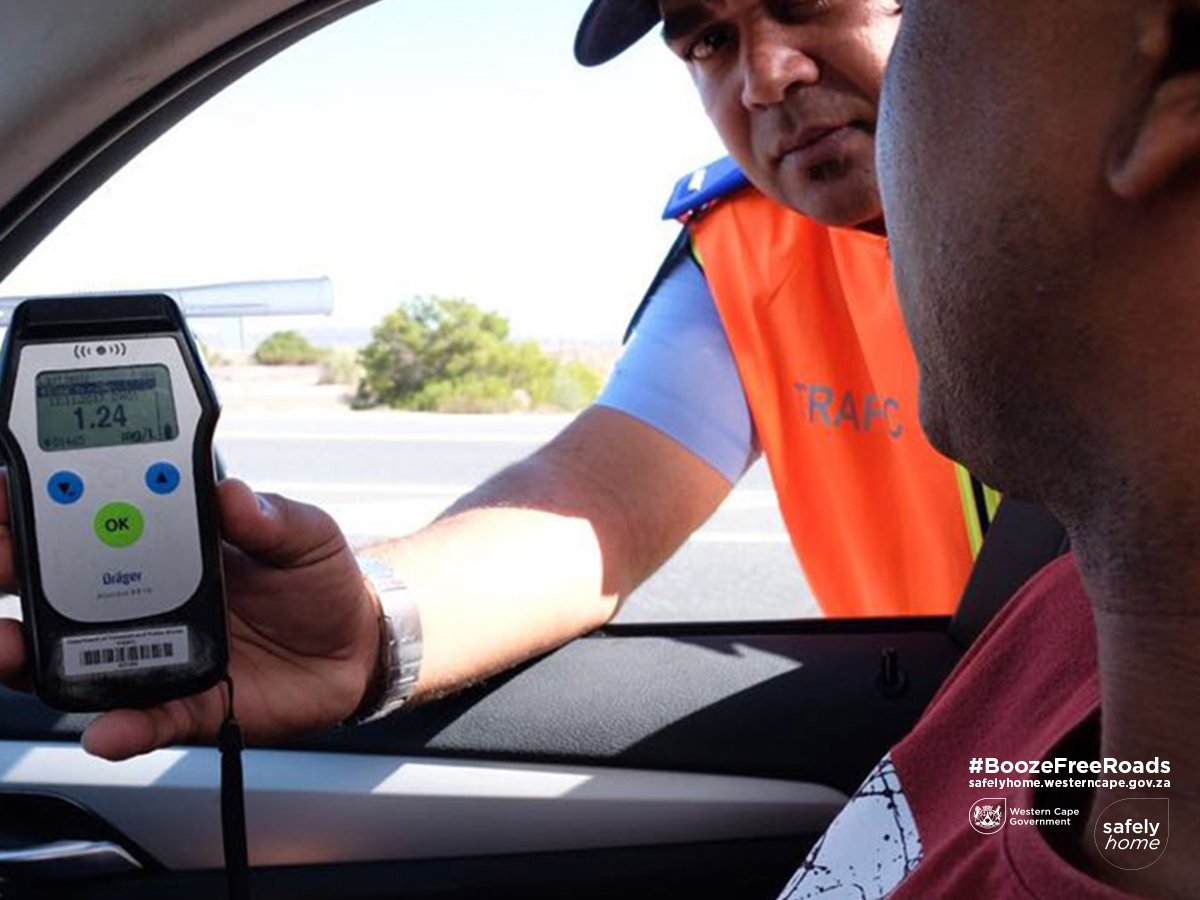
The Department of Transport and Public Works supports the City of Cape Town in the fight against drunk driving.
This week, the City Of Cape Town (CoCT) Traffic Service will launch a new Mobile Alcohol Evidentiary Breath Alcohol Testing (EBAT) vehicle, with the assistance of the Western Cape Department of Transport and Public Works (DTPW). The new
EBAT vehicle will be the second unit of its type deployed in South Africa, joining a unit currently deployed by Provincial Traffic Services in the Caledon district.
EBAT vehicles are specially converted panel vans equipped to enable officers to take evidentiary breath samples from motorists anywhere, any time. Positive samples can be used in court to convict motorists driving under the influence, removing the need for a blood test. The vehicles are deployed in support of roadblocks and Random Breath Testing (RBT) operations.
DTPW provided training to the CoCT Operators and have provided CoCT with two Dräger 9510 ZA Evidentiary Breath Alcohol Testing machines, and the technical support and advice necessary to equip and deploy the new vehicle. DTPW was able to draw on its close co-operation with the Western Cape Director for Public Prosecutions (DPP) in a process that has seen the re-introduction of evidentiary breath alcohol testing in the Province.
The EBAT system differs from blood tests in that the results are immediate. Motorists whose alcohol level is below the legal limit can be released immediately after receiving the results while with blood tests the motorist can be detained overnight or until the end of the weekend and can spend months facing legal uncertainty. Cases of motorists who fail the EBAT test can be dealt with quickly using the results of this test.
The City has met all prescripts and now ready to use the mobile evidentiary breath alcohol testing for illegal levels of alcohol in drivers.
“The vehicles are a force multiplier in the struggle to remove drunk drivers from the Province’s roads. They severely curtail the amount of wriggle room motorists who drink and drive have to try and avoid the consequences of their actions,” said Jacqui Gooch, DTPW Head of Department.