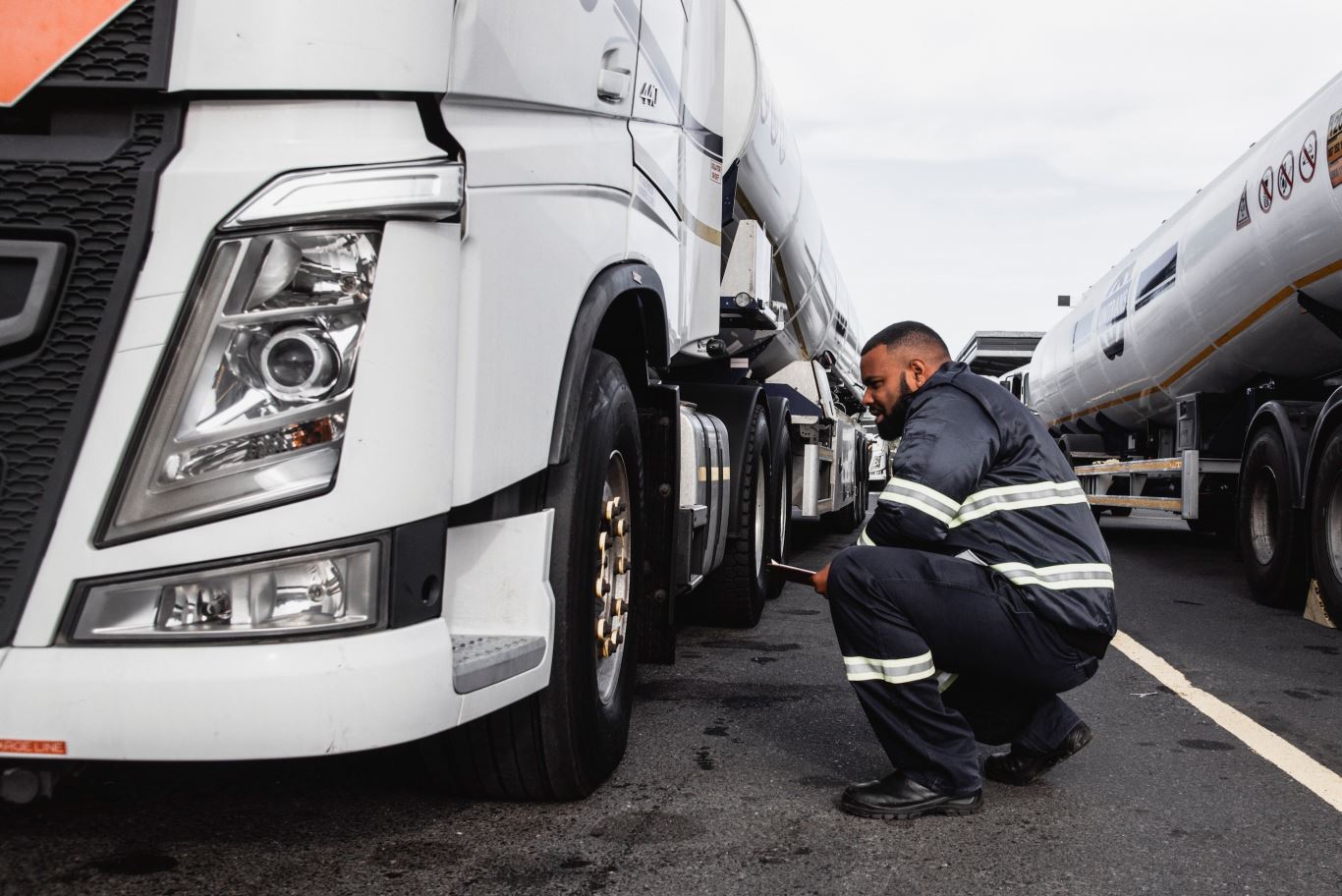
Marked annually on 28 April, World Day for Safety and Health at Work offers a timely moment to reflect on how safety is evolving across Africa’s transport and logistics sector. In leading operations, safety is increasingly monitored, interpreted, and acted on in near real-time, rather than being assessed only after the fact.
In environments defined by long distances, variable infrastructure, and operational unpredictability, static safety policies are no longer sufficient. Safety is increasingly being treated as a data-enabled system, designed to surface potential risk earlier and enable more immediate proactive intervention.
This marks a shift from traditional lagging models built on incident reporting and post-event analysis. In many operations, data can now help identify patterns that may indicate emerging risk, enabling earlier response.
What is the impact?
• Reduction in on-road risk and improved driver behaviour patterns, lead to a lower likelihood of incidents and accidents.
• Track the prevalence of specific behaviours in certain contracts and/or fleets. This can also be measured at the Group.
• Visibility of risk events, from near collisions to actual collisions, enables the systematic review of at-risk drivers.
• Ensure risk-based training and coaching programs are applied, and implement targeted fatigue management measures for specific drivers.
Across the industry, including insights emerging from Unitrans’ latest podcast series, there is growing recognition that data is playing a more central role in how safety is managed and monitored. How people respond to the information available is critical to creating a multilayered approach to address risks. Trust needs to be instilled to such an extent that specific behaviours are critical indicators and acted upon immediately. Specific protocols are entrenched in our business to activate a real-time response that saves lives.
In practice, this begins with visibility. In large fleet operations, vehicles are monitored in near real-time through integrated telematics systems, generating continuous data on location, speed, and driver behaviour and potential route risks.
The value lies in interpretation. Patterns such as repeated harsh braking, erratic speed behaviour, or route-specific anomalies may serve as early indicators of risk, enabling intervention before a critical moment. A fatigued driver can be flagged in real time, cab visibility can be immediate, a high-risk route can be reassessed, and a vehicle can be serviced before failure. In this way, data can help shift the response window forward. This is the difference between a near collision and a fatality.
This marks a move beyond enforcement towards behaviour-based risk management. Compliance remains essential but is now complemented by data-driven insight that helps organisations understand, not just instruct, driver behaviour.
The role of people remains critical. Data alone does not improve safety. It is the combination of data, human judgement, and operational experience that enables meaningful action, particularly in African environments where conditions shift rapidly and context is as important as the data itself.
This dynamic is most evident in high-risk sectors such as fuel and chemical logistics, where the margin for error is minimal. Here, real-time visibility and predictive maintenance can support the integration of safety into broader operations. Data connects vehicle condition, driver behaviour, route planning, and environmental factors, creating a more integrated view of risk and supporting tighter operational control. Preventing incidents remains both a safety priority and an operational consideration.
This integrated approach is also reshaping how safety is measured, shifting the focus from lagging indicators such as incident frequency rates to leading indicators including behavioural trends, near misses, and route-specific risks. The emphasis moves from outcomes to precursors.
For organisations operating at scale across Africa, this level of insight is increasingly important. Operators such as Unitrans, which manage large and geographically dispersed fleets, illustrate how data-led approaches are being applied in practice. At this scale, safety is increasingly viewed not only as a compliance requirement, but as an operational capability linked to reliability and performance.
As logistics networks expand and complexity intensifies, safety will depend less on static frameworks and more on dynamic, data-enabled systems. While we don’t claim to have all the answers, we can say that we have significantly reduced on-road risk over the last 18 months.
The shift is already underway. The question is no longer whether data plays a role in safety, but how effectively organisations apply it to support earlier and more informed decision-making.
Truck and Freight