 4x4 Training in South Africa / Types & Levels of Training Explained
There have been significant changes in the “Driver Training Industry” in South Africa in recent years. Not only has many vehicle manufacturers managed their own driving academies and training centres but many private training facilities have become operational.
Driver training is not only important and recommended for the drivers of passenger vehicles but also for drivers in the fast growing 4x4 vehicle industry! The beautiful, yet often challenging terrain of the South African outdoors present some unique challenges to drivers.
Unfortunately not only the highly professional 4x4 driver trainers have seen a gap in the market but also some fly by night operators with very dodgy credentials. In an effort to formalize the industry the 4x4 community has decided to put up their hands to actively promote proper self -regulation and qualification/training.
With many different academies, training centres and specialized or outsourced services available we decided to approach Andre Botha from Just 4x4 Adventures and gain more clarity on the types and levels of 4x4 training in South Africa.
Types of 4x4 Training
There are only two main distinctive types of training taking place.
Accredited training (standardized & formal) and Certified training (non- standardized and informal).
To the contrary of the perception that 4WD training is only for users taking their vehicles off-road, accredited 4WD training was developed for all 4WD users On-Road (gravel and tar) and off-Road (tracks & trails).
Certified Training
Before the registration of the Unit Standards for 4WD training the 4x4 industry had to make use of certified 4WD training.
This training was provided by self-acclaimed experts in the 4WD industry whom took advantage of the demand for 4WD training and started their own training operations.
No standard existed so everybody presented their own product under no supervision nor regulation.
On completion of such certified training all learners received a certificate of attendance.
With this in mind I am not saying that the products presented was of substandard, to the contrary. I attended a number of the more prominent programs in my investigations and found some very well presented programs; however I must admit they were in the minority.
A vast variety of different programs saw the light, such as Introduction to 4x4, Level 1-5, Advanced 4x4 and possibly a couple more.
The bottom line is that none of them was standardized nor approved by the industry or from a set curriculum to which can be referred to.
Accredited Training
Accredited Training is a step in the right direction. From certified training we moved forward to accredited training were training is formal & standardized. This training is presented by accredited training providers who manage their instructors, assessors and moderators to provide the highest levels of accredited training.
Accredited providers
Accredited providers undergo a strict qualification process to be able to be accredited against the unit standards to be presented.
These providers have to be registered tax payers, as well as have sound policies and procedures in place to name a few requirements before being considered for accreditation.
Regulated
Accredited providers are regulated by the SETA and its ETQA dept (Education Training Quality Assuror)

Qualified Instructors & Assessors
Accredited providers have to make use of qualified facilitators (instructors), assessors and moderators to present accredited unit standard training.
A qualified instructor is competent by one level higher than the unit standard presented, competent on the unit standard presented as well as us 117871 Facilitation of learning.
A qualified assessor is competent by one level higher than the unit standard presented, competent on the unit standard presented as well as us 115753 conduct outcomes based assessments.
Assessors have to be registered to assess the relevant unit standard by the SETA. At African Off-Road Academy it is policy that the facilitator and assessor not be the same person, this ensures quality training and high levels of customer satisfaction.
Formalized certification
Accredited providers present learners with unit standard related skills & knowledge and confirm Learner’s competence with a certificate of competence.
Competent learners receive credits at the specified level on the National Learner Record Database.
Learners can accumulate credits on various levels to achieve national certificates, diplomas and degrees.
Standardized
All accredited training provided must be related to the relevant Unit Standard presented.
Industry approved
Before a Unit Standard can be approved, it has to undergo certain steps for approval of which one is "public comment" this is where the public or industry can scrutinize the unit standard and raise their comments which is then addressed before approval and registration.
Credits and Levels
All unit standards is allocated credits and a level. The levels are grouped in bands, general education, further education and higher education from level 1 to 8 and recently 11.
The credits allocated refer to the amount of notional learning hours a learner has to complete to qualify for competence.
Unit Standards
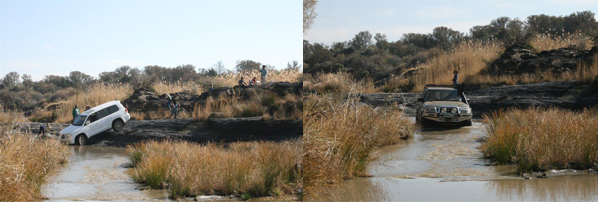
US 254135 Apply the techniques for operating four wheel drive (4WD) vehicles, in on-road and off-road conditions. Level 3 Credits 4
US 254154 Apply the advanced techniques for operating four wheel drive (4WD) vehicles, in on-road and off-road conditions. Level 3 Credits 8
-
Defensive Driving Standards
US115311 Apply advanced driving skills / techniques in defensive and offensive situations Level 5 Credits 9
US 377201 Apply advanced driving skills: defensive driving Level 5 Credits 6
US 377220 Apply advanced driving skills: offensive driving Level 5 Credits 5
US 242656 Apply technical knowledge and skill in order to manage risk in motor vehicle losses due to theft and hijacking. Level 4 Credits 3
US 117871 Facilitation of learning Level 5 Credits 10
US 115753 Conduct outcomes based assessments Level 5 Credits 15
What are the benefits of such training?
The benefits are twofold, depending on the needs of the learner. We as accredited providers aim to provide the learner with skills and knowledge which can be applied to ensure optimal, safe and environmentally application of his 4WD vehicle on and off-road.
Acquire skills and knowledge
We would like to present the learner with knowledge and skills and confirming it with a certificate of competence.
As opposed to the recent skippers and arms licenses were learners required the qualification rather than the knowledge and skill to go with it.
I sure hope that this would not become the case when the environmental sensitive areas gets proclaimed and formal training becomes the key to access. There is so much to gain out of skills and knowledge as opposed to a qualification.
Money back
Training can be funded by skills development.
Insurance companies offer rebates on premiums on presentation of accredited certificates.
Competence on these unit standards will defiantly ensure a candidate applying for related employment such as a motor vehicle salesman, tourist guide, game ranger, geologist etc. with better employment possibilities and better earning power.
SANOTA
The South African National Trainers Association strives to bring all parties involved together to formulate standardized programs throughout the industry certified and accredited.
SANOTA also acts as the speaker for trainers on the NOW whom represents the industry to the department of environmental affairs and the government.
Besides the obvious needs (safety/competency/environmental/etc) to learn these specific skill sets, is there any current legal requirement? If not, is there any future proposed legal requirement?
Currently there are no legal requirements enforcing accredited 4WD training. However there are reports of National parks and reserves were these have been requested as well as the industrial sector rather opting for accredited than certified training options.
I think, one thing that we've got to realize is, if we want a sustainable industry of which we enjoy the benefits of my provider business and Jan Alleman the 4x4 owner. We have to take responsibility and move forward in a positive direction before government intervenes and enforce legislation upon us as is on its way.
Can a 4x4 driver who is very experienced avoid having to go through basic training all over again?
Yes surely we accommodate the "very experienced" drivers.
However allegedly experienced, experienced by what standards, measured against what curriculum?
I agree! I rated myself as "very experienced" in the art of 4x4 diving specially after completing 15 odd different certified training courses presented by similar "very experienced" instructors.
After training 57 "very experienced" subject matter experts as instructors and assessors I realize today that after being privileged to learn from each one of them I am possibly the most "very experienced" person in 4x4 today.
This means nothing - what counts is I am competent against US254135 US254154 and that is measurable, acceptable by the industry no matter what I think or anybody says. I have my "Matric in 4x4" and nobody can dispute that or take it away from my.
Drivers who still feel they have the skills and knowledge to be found competent can apply for a formal assessment not RPL and be formally assessed against the unit standards. Just remember in the past not much attention was given to the environmental aspects.
At African Off-Road Academy we have a challenge. Anybody gaining 95% or more in a formal assessment gets his accreditation free. MAKES YOU THINK?!
Where can the 4x4 driver get trained?
Firstly decide between certified and accredited. If your choice is accredited, then your options are limited to a few accredited providers and TETA will be able to provide details of accredited providers.
African Off-Road Academy is a national provider with 57 qualified Instructor- assessors nationwide that can provide standardized training in all provinces of Southern Africa.
A learner can attend facilitation in George while on vacation and be assessed in Pietersburg where he lives a month later if required or do both one day after another at the same location. Learners can submit a training application on our website www.africanoffroad.co.za and will automatically be directed to the instructor assessor tem in his area
Is there a fixed fee for this training, or can the trainer charge what he likes?
There is no fixed rate for accredited training. Taking in consideration that learning and assessment material gets provided, there are venue, trail, meals and refreshment costs involved as well as an instructor and assessor fee. Comparing with other accredited programs which runs in the order of between 3 and 4 thousand rand per unit standard I think the current R1250.00 and R2500.00 we are charging is not out of reach.
How does a trainer become an accredited trainer?
This all depends if the instructor wants to operate under an accredited provider or wants to accredit by himself.
If he chooses to operate under a provider which is the obvious thing to do is to apply to a provider such as African Off- Road Academy to be trained.
The first step is to qualify on the unit standards you want to facilitate.
Step two is not compulsory but recommended. To qualify against US117871 Facilitation of learning.
Step three is to qualify against US 115753 conduct outcomes based assessments.
The provider will register the instructor with the SETA and you are ready to train. The provider will provide you with the relevant systems paperwork etc to provide accredited training.
If the choice is to accredit by himself, well good luck!!!
Content with recognition to:
Andre Botha (4x4 Overland Tour Guide GP3431 & 4x4 Assessor)
Just 4x4 Adventures
Approved Member of African Off-Road Academy
Tel: 0825766058
Fax: 0866121810
www.just4x4adventures.co.za
[email protected]
Also view:
4x4 Off-road Vehicle Safety and Driving Techniques