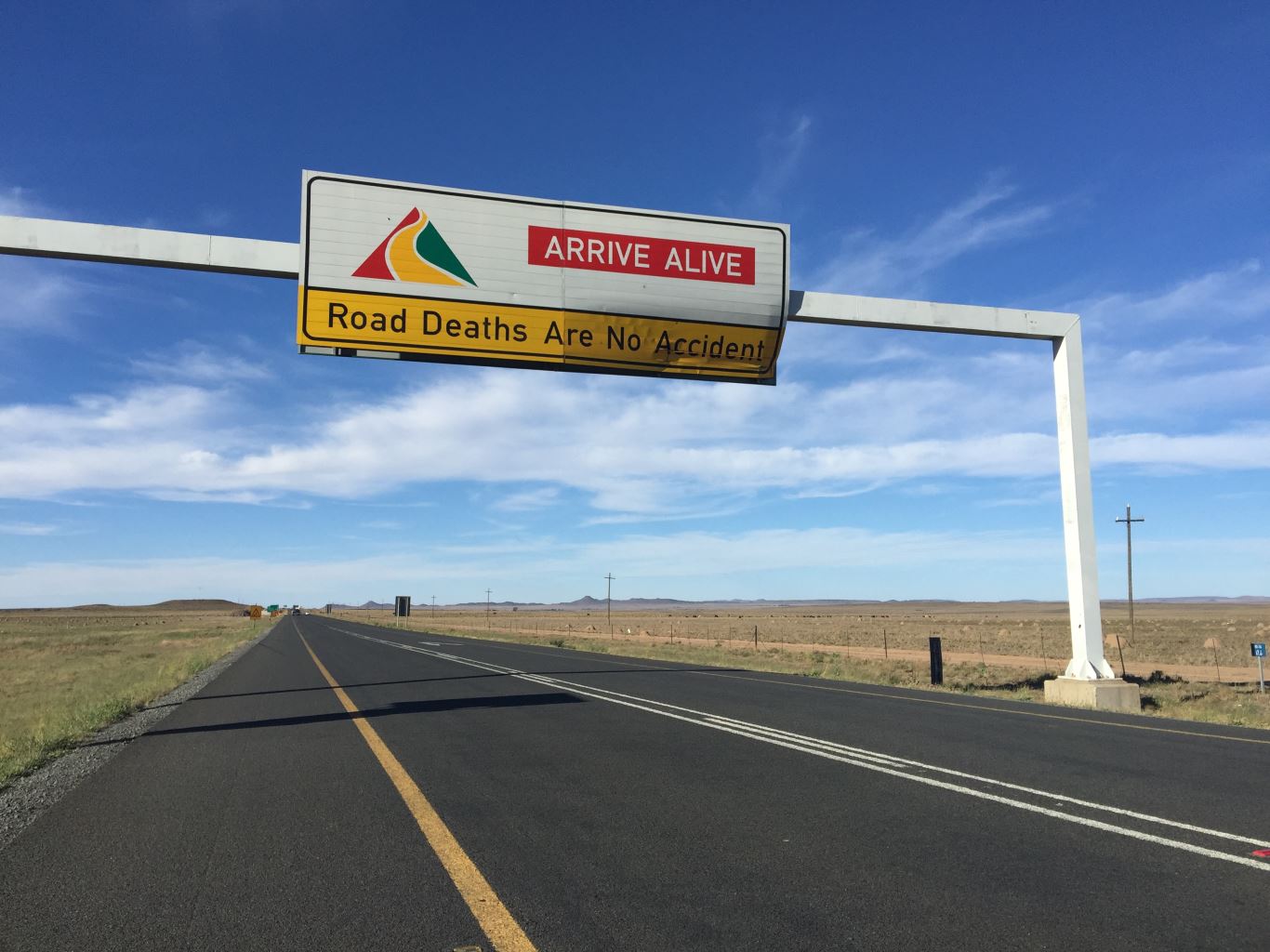
The United Nations Secretary-General's Special Envoy for Road Safety, Jean Todt, will visit South Africa from 13 to 15 May 2024 to support national and local authorities’ road safety initiatives. In particular, the Special Envoy will launch the UN Global Campaign for Road Safety, in partnership with the No.1 outdoor advertising company worldwide, JCDecaux, under the hashtag #MakeASafetyStatement.
One of the main goals of this campaign is to raise awareness of life-saving actions among young generations, who as statistics show, are the major victims of road crashes especially for young people aged from 5 to 29 years old worldwide. Supporting the efforts of South Africa in addressing this issue is key in a country where more than 60% of the population is under 35 years old.
The launch events are to be held in Johannesburg and Pretoria with the Minister of Transport of South Africa, the Executive Mayors of Tshwane and Johannesburg.
Mr. Todt will meet members of the Government as well as representatives of the private and public sectors and NGOs to advocate for the effective implementation of the Global Plan for the Decade of Action for Road Safety 2021-2030, which aims to halve the number of road fatalities by 2030.
"Africa is the continent most affected by road crashes. Knowing that these affect the youngest first, it is beyond the human tragedy, an economic devastation sacrificing or invalidating for life the active force of a country. While the vaccine to avoid this carnage on the road exists, I urgently call on everyone to use it." -- United Nations Secretary-General's Special Envoy for Road Safety, Jean Todt.
#MakeASafetyStatement
The launch in South Africa of the UN Global Campaign for Road Safety - #MakeASafetyStatement, in partnership with JCDecaux, is part of UN efforts to raise public awareness of life-saving initiatives on the road. By the end of 2025, the campaign will appear on billboards and in public places in 80 countries, thanks to a global partnership with JCDecaux. It will be broadcast in about 1,000 towns and cities in 30 languages.
The campaign has garnered support from international and national celebrities, inviting individuals to consider their driving behaviour, emphasizing the importance of small actions that can save lives, and promoting partnerships to combat this scourge. The ultimate goal of the campaign is to decrease the number of casualties caused by road accidents around the world. 2
Under the slogan #MakeASafetyStatement, the campaign brings together celebrities worldwide, including Naomi Campbell, Didier Drogba, Ousmane Dembélé, Faith Kipyegon, Novak Djokovic and Youssou N'Dour, to encourage users to adopt simple but effective rules to keep their roads safe.
Ten South Africa’s celebrities are also involved such as Yvonne Chaka-Chaka, Bryoni Govender, Dr. Khumalo, Sello Maake Ka Ncube, Maduvha Madima, Leanne Manas, Dr. Moratwe Masima, Thokozani Ndaba, Gaisang Noge, and Caster Semenya.
“Human Factors contribute 88% to South African road fatalities and therefore the involvement of celebrities as role models for the Youth in the #MakeASafetyStatement campaign will contribute towards the reduction of accidents on our roads”, stresses Ms Sindisiwe Chikunga, Minister of Transport of the Republic of South Africa.
New alarming figures
This visit coincides with the recent release of the Global Status Report on Road Safety 2023 from the World Health Organization (WHO) on road safety, highlighting that Africa remains the region the most affected by this tragedy.
According to the new WHO report, the figures for victims on African roads continue to grow with a mortality rate of 19/100,000 people, while in Europe, we observe a rate of 7 deaths/100,000 people. In South Africa, there are 25 deaths per 100,000 people.
According to the World Bank (2016), the cost of road crashes represented 8.6% of South Africa’s GDP in 2016. The RTMC 2023 State of Road safety Report highlights for 2023 the rate of 2.74% of South Africa 's GDP.
Reliable data for swift revitalization
Recent bus accidents have highlighted the run-down state of Africa's vehicle fleet. Failure to comply with the Highway Code and to enforce penalties are also significant causes of accidents.
The solutions to be implemented are strengthening the health services that treat the injured, adhering to the African Road Safety Charter and the United Nations Basic Conventions on Road Safety, including stepping up public awareness campaigns. Collecting reliable and systematic data on road accidents and monitoring casualties is also a key element in reducing the number of victims.
There is also a need to protect the most vulnerable road users, pedestrians, and cyclists, who are often the most disadvantaged and the youngest. Africa has the highest proportion of cyclist and pedestrian deaths, accounting for 44% of all road deaths.
In South Africa, the efforts of the authorities are to be commended, with new initiatives such as the implementation of the Administrative Adjudication of Road Traffic Offences, Research various areas of Road Safety, the adoption of new technologies to enhance access to traffic licencing services (National Traffic Information System Online Services), the professionalisation of the Traffic and Road Safety Officers Training through the National Framework Level 6 Qualification), Standardisation and Harmonisation of Traffic Law Enforcement and the development of a National Traffic Law Enforcement Code.
Risk factors that are too often neglected 3
Drink-driving, speeding, drowsiness, carelessness, non-use of seatbelts and helmets, negligence and non-compliance with the Highway Code are responsible for most road accidents in Africa. However, according to the WHO, more progress must be made regarding legislation and safety standards.
Only six countries in the world have laws that comply with WHO best practices for all the risk factors - speeding, driving under the influence or distracted driving, use of UN-standard motorbike helmets, and use of seatbelts and child restraints.
In South Africa, speeding in urban areas is high (60KM/h), and child restraint systems are not always available. At a time when the use of motorbikes is on the increase, particularly among young people, the wearing of seatbelts and quality helmets remains a real challenge, even though it could prevent many deaths and reduce the risk of serious injury by 69%.
Recent data reveals that majority of road crashes occur at night from Friday until Sunday with Youth and in particular Pedestrians being the leading victims of road crashes.