- Wet weather presents significant safety risks for motorists, including longer stopping distances and a chance of aquaplaning
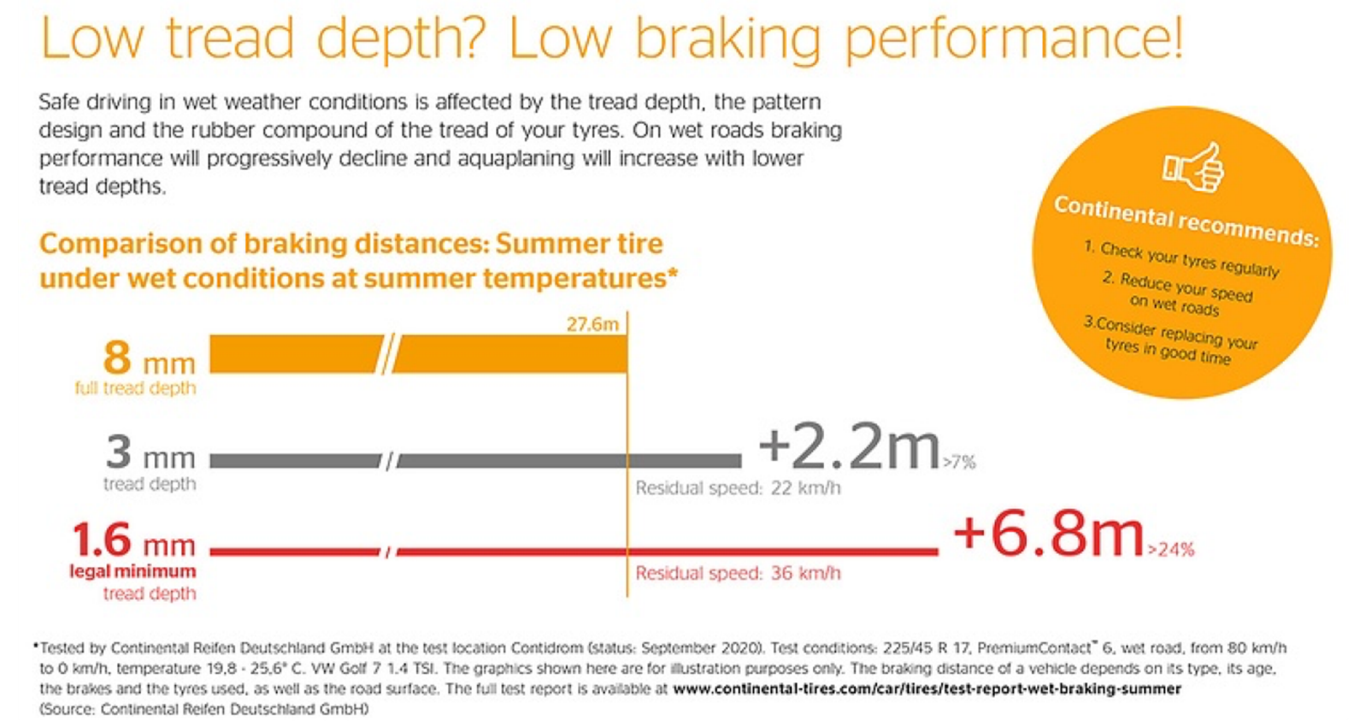
- Replacing tyres when the tread depth reaches 3 mm reduces the chance of an accident
- Potholes are a hidden hazard during heavy downpours and at night, so extra caution is required
GQEBERHA, South Africa, July 07, 2025. Winter in South Africa is accompanied by a series of cold fronts that sweep across the country, bringing waves of heavy rain and occasional flooding that stretches from the Western Cape through the Eastern Cape and inland, making driving treacherous for motorists.
Tyres remain the most important safety component on any vehicle, providing the crucial point of contact between the car and the road, responsible for managing all of the forces generated by accelerating, braking and steering. While the handling characteristics of the vehicle and tyres are fairly predictable in dry conditions, wet roads significantly reduce the threshold for maintaining grip and control, and add a measure of uncertainty regarding the limits of safety.
The tread design of a tyre fulfils several roles, from noise reduction to enhancing traction. However, a crucial element of any tyre is the grooves in the tread that are designed to channel water away from the road surface. This ensures that the rubber remains in contact with the road to provide the all-important grip. However, even the best tyres in the world and cars with the most advanced active safety features experience longer stopping distances in wet conditions compared to the dry due to the slippery conditions – and driving behaviour should be adapted to suit.
The situation becomes even more dangerous as the tyre wears and the grooves in the tyre become shallower. New on-road tyres typically have a tread depth of 8 mm, while off-road tyres are between 10 and 12 mm. New tyres are capable of dispersing up to 30 litres of water a second at 80 km/h, but as the tread wears, it is able to displace less water – leading to longer stopping distances.
Although the legal tread depth is 1.6 mm for tyres with integrated tread wear indicators, or 1 mm without this feature, it is recommended that tyres should be replaced at a minimum tread depth of
3 mm due to much longer braking distances experienced in the wet with tyres that are worn.
In a back-to-back tyre test performed at Continental’s advanced Contidrom testing facility in Germany, the braking distance increased by 6.9 metres on tyres with the legal minimum tread depth of 1.6 mm, compared to the full tread depth of 8 mm (an increase of 24 percent). Tyres with a 3 mm tread only took 2.7 metres (or 7 percent) longer to come to a full stop, proving exactly why the condition of your vehicle’s tyres is critical when driving in the wet.
.png)
Aquaplaning
Every tyre has a limit on the volume of water it can displace via the tread grooves when driving. Once that limit is exceeded, water accumulates in front of the tyre faster than it can be displaced, resulting in the tyre being separated from the road surface by a layer of water, which is known as aquaplaning. In this dangerous situation, the tyre loses all grip, and the driver experiences a total loss of control – with potentially disastrous consequences.
Two major factors contribute to aquaplaning, the first being the tyre’s remaining tread depth. As with wet braking, the ability of the tyre to disperse water reduces as the tyre wears, and there is a greater risk of aquaplaning when the tyre has worn down to 3 mm, and even more so as it reaches just 1.6 mm.
Speed is the second contributor towards aquaplaning. The faster the tyre is travelling, the higher the rate at which it is required to disperse water. Once the tyres are overcome by the volume of water, they lose contact with the road surface and the car becomes out of control. Steering and braking inputs have little impact on the car’s trajectory in this situation, and the assistance of driver aids such as ABS brakes and stability control is rendered almost entirely ineffective until the vehicle is through the water and grip is restored, in which case it may be too late to avoid an accident.
Therefore, it’s essential to reduce speeds when driving in wet conditions, approach any standing water with caution, and ensure that your tyres have the required tread depth to handle these conditions.
Potholes – the hidden danger
Wet roads hide nasty surprises, with all types of hazards lurking beneath the surface of standing water. Potholes are a major hazard in South Africa due to a lack of road maintenance, while extended rainy periods result in new potholes emerging from one day to the next.
Approach wet conditions with extra care and reduce speed to account for potential tyre-decimating potholes that may be filled with water and not immediately visible – especially at night when they are more difficult to see. Hitting a pothole at high speed risks destroying the tyre and possibly even the rim or suspension of your vehicle, while lower speeds significantly reduce the severity of the impact.
Should you hit a pothole, pull off the road as soon as possible in a safe area and inspect the sidewall of the tyre for any cuts or bulges that may indicate external or internal damage. If in doubt, head to your nearest tyre fitment centre, such as BestDrive, as soon as possible for inspection by a tyre expert.
For ultimate peace of mind, Continental Tyre South Africa offers customers its ContiSure Warranty, which is included at no additional cost from its nationwide BestDrive stores with the purchase of all replacement Continental-branded passenger, light commercial, 4x4 and SUV tyres.
First introduced in 2016, ContiSure covers accidental tyre damage from potholes and other road hazards. Should a damaged tyre be deemed irreparable by the BestDrive store, the tyre will be replaced at no cost to the customer – as long as the tyre is registered after purchase on the ContiSure website, and the tread depth is greater than the legal limit of 1.6 mm