 Netcare 911 has partnered with mySOS to offer our clients fast and easy access to all emergency services in South Africa
mySOS is a free, independent and all-inclusive smartphone application that could serve as a “one-stop-shop” solution for access to the closest and most appropriate emergency services in South Africa.
mySOS offers our clients access to appropriate emergency assistance when:
- You don't know who to call
- You don't know where you are
- You want to notify your emergency contacts about your emergency and the exact location
- You want your emergency contacts and the emergency services to navigate directly to your location in an emergency
Additional benefits include:
- Police and Fire Department access
- Road Assistance provider access
- A list of hospitals, doctors and dentist locations with automatic routeing
- Pharmacy and veterinary service location with routeing
- A personalised tracking service while driving, walking, hiking etcetera.
Download the app now. Download the mySOS app from your app store – it is FREE!
Which phones will be able to use the mySOS app?
- iPhones 4 and iPhone 5 running IOS 5 or later
- Android phones running Android version 4.0 or later
For more information and FAQ go to www.mysos.co.za
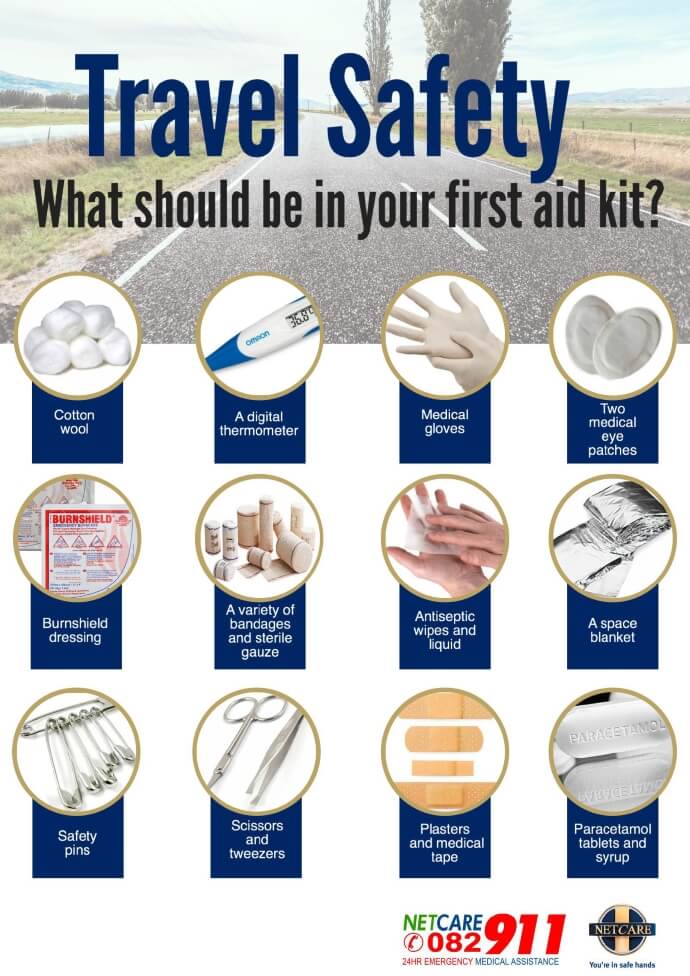
Travel Safety - Road and vehicle safety
Make sure that your vehicle is roadworthy by performing these safety checks:
- Check that all lights are working
- Make sure the brakes function properly
- Ensure your vehicle has a spare tyre
- Pack a basic toolbox when travelling for emergency maintenance
- Check the water, oil and other liquid levels
- Check the tread and condition of the tyres
- Ensure that your car licence and driver's licence are up to date
- Make sure that all the windows and mirrors are clean and undamaged.
While on the road, follow these tips to help ensure that you reach your destination safely:
- Stop often to rest and stretch your legs. Always stop in well-lit public places.
- Never driver under the influence of alcohol or drugs.
- Babies and small children should always be secured in a child car seat.
- Stick to the speed limit and always wear your seatbelt.
Holiday Safety - Staying safe around water
- Swimming in the ocean is very different from swimming in a pool. When you are at the beach, only swim within the beacons set out by the lifeguards.
- Never go swimming alone. Always tell someone where you are going to swim and when you will be back.
- Never swim under the influence of alcohol or drugs or when you are feeling ill or tired.
- Adhere to any warning signs set out by the lifeguards.
- Do not swim in the ocean if the water is visibly rough or murky.
- Never dive or jump into a mass of water if you don't know how deep it is or whether there are submerged rocks.
- Children should never be left alone around water. Cover your pool with a net and make sure it is fenced off. Never let children go to the beach alone.
Choking is no joke
What to do if you see someone choking.

CPR - How to save a life
The very first thing to do if you find someone unconscious and unresponsive is to try and rouse them and check whether they are breathing normally. If you cannot wake them, and they are not breathing normally, this constitutes a life-threatening medical emergency, which requires immediate action.
- Lay the unresponsive person on their back on a flat surface.
- Place one of your hands flat in the middle of the person's chest, and the other hand on top of it.
- Press down hard, compressing the chest by about 5cm, and then release the pressure to allow the heart to refill with blood. For infants, use one hand only to a depth of 4cm. For tiny babies, use two fingers only.
- Repeat the chest compressions at a rate of about two compressions per second.
- For every 30 chest compressions, give the person two rescue breaths.
- Rescue breaths are achieved by pinching the person's nose closed, tilting their head back and covering their mouth with yours, then exhaling into their mouth until the chest rises. If you are unable or unwilling to give mouth-to-mouth breaths, then continue with the chest compressions only.
- Continue to perform CPR until the person revives, or professional help arrives.
Holiday Safety - Ensure that paramedics can find you in an emergency
- In the case of a medical emergency, phone Netcare 911 on 082 911 immediately.
- State your name and number in case you get disconnected.
- State the nature of your emergency so that the appropriate level of emergency medical care can be dispatched to you.
- Ensure that you provide the call-taker with the correct street address and exact area.
- If you are unfamiliar with the area, provide the call-taker with the nearest street name of visible landmarks.
- Do not hang up until the call-taker says that is in order to do so.
Holiday Safety - Protecting yourself from the sun this summer
- Limit your exposure to the sun, especially between 100:00 and 15:00, as this is when the sun's ultraviolet rays are most damaging.
- Always wear sunscreen with a high sun protection factor (SPF) when you are going outdoors. Remember to re-apply it frequently.
- The heat and the sun will dehydrate your body quickly. Mae sure that you drink lots of water.
- Protect your eyes from the sun by wearing good quality sunglasses and a hat that will shade your face from the sun.
- Do not be fooled by cloudy weather. You can still be burnt by the sun's rays, even when it is cool and cloudy outside.
- Take extra care of children and the elderly, as they are particularly vulnerable to sunburn and dehydration.

Other holiday safety tips
Heat stroke
Signs of heat stroke can include the following:
- High body temperature.
- Red hot, dry skin.
- Loss of consciousness.
- A full pounding pulse and rapid shallow noisy breathing.
Without prompt care, a child with heat stroke will die, so act quickly:
- Move the child to a cool place and remove the clothing.
- Help the body to cool by placing moist, cool cloths on the forehead and wrists, and fan the child.
- Call for medical assistance.
Heat stress and your baby
- About 55 to 60 percent of a child’s total body weight is made up of water.
- A healthy body temperature is regulated around 37°C.
- In hot environments, heat is lost through the skin by the evaporation of sweat.
- Children cannot regulate their body temperature as well as adults. Because babies are born with the skin that they will eventually grow into as adults, the volume of skin covering a baby’s body is greater than that of an adult. This volume of skin can make it harder for a baby’s body to maintain fluids.
- Children generate more heat because they have a higher metabolic rate and they do not sweat as much as adults.
- The risk of excessive heat is water loss (dehydration), which can impair body function and lead to heat stroke that can be life threatening.
Anaphylaxis
Anaphylactic shock is a severe whole-body allergic reaction to a substance that can include some foods, for example, peanuts, or to stings or drugs. Anaphylaxis happens immediately after exposure to the allergen. It is severe and involves the and action must be taken immediately.
What can trigger an anaphylactic reaction?
- Anaphylaxis can occur in response to any allergen. Common causes include, but are not limited to:
- Food allergies such as nuts and shellfish
- Drug allergies, for example, penicillin or sulfa
- Insect bites/stings
- Latex allergies
Pollens and other inhaled allergens rarely cause anaphylaxis. However, some people have an anaphylactic reaction with no known cause. Anaphylaxis is life-threatening and can occur at any time.
How quickly do symptoms develop and how do they manifest themselves?
- Symptoms develop rapidly, often within minutes and may include the following:
- Respiratory system: coughing, wheezing, shortness of breath, chest pain/tightness, swelling or tightness of the throat, hoarse voice, nasal congestion, trouble swallowing (70% of reactions)
- Cardiovascular system: weak pulse, dizzy or lightheaded, loss of consciousness or collapse, shock, pale/blue colour, palpations (10-45% of reactions)
- Skin: hives/itching, warmth, redness, rash (80-90% of reactions)
- Gastrointestinal system: nausea/vomiting, pain, cramps, diarrhoea (30-45% of reactions)
- Central nervous system: uneasiness, throbbing headache, dizziness, confusion, tunnel vision (10-15% of reactions)
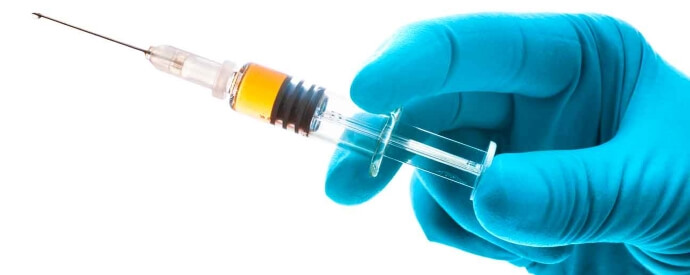
Immunisations
International travellers should be up to date on all indicated routine vaccinations and should be vaccinated against vaccine-preventable, destination-specific diseases for which they are at risk. An individualised risk-benefit assessment is given to each traveller.
Routine vaccinations
- Diphtheria
- Hepatitis B
- Haemophilus influenza type b
- Human papillomavirus
- Seasonal influenza and Influenza
- Measles
- Mumps
- Pertussis
- Rubella
- Pneumococcal disease
- Poliomyelitis (Polio)
- Rotavirus
- Tuberculosis (TB)
- Tetanus
- Varicella
Selective use for travellers
- Cholera
- Hepatitis A
- Meningococcal disease
- Rabies
- Typhoid fever
- Yellow fever
Required vaccinations
- Yellow fever
- For Hajj and Umrah
- Quadrivalent meningococcal vaccination
- Seasonal influenza vaccination and
- Polio vaccinations

What measures will help prevent travel-related diseases
- Learn about your destination, including health risks.
- Visit the travel clinic 4-6 weeks before departing.
- Have the recommended vaccinations
- If you are visiting a malaria risk area be sure to continue taking your antimalarial drug for 4 weeks (doxycycline or mefloquine) or 7 days (atovaquone/proguanil) after leaving the risk area.
- Remember to pack all regular prescription medications, plus any recommended medications, insect repellants and other supplies.
- While travelling try not to take risks with your health and safety.
- Be careful about food and water, and wash your hands often with soap and water.
What symptoms or signs should prompt medical evaluation during travel?
- Diarrhoea and fever above 38 C
- Bloody diarrhoea
- Fever or flu-like illness if you are visiting a malaria risk area
- Animal bite or scratch
- Serious injury or a motor vehicle accident or sexual assault.
- If you think you need emergency assistance contact your travel insurance company or local consulate.
What symptoms or signs should prompt medical evaluation after returning home
- Fever
- Persistent diarrhoea, stomach cramps and nausea.
- Respiratory infection (sinusitis sore throat cough and shortness of breath)
- Skin lesions or rashes
- Always tell your doctor that you have travelled especially if you have a fever or flu-like illness for up to a year after you return from a malaria risk area
Also view:
Road Safety Tips for the Festive Season from ArriveAlive.co.za
The Matriculant and Safety on the Roads during the Holidays
Road Safety with a Cautious Smile for Festive Season