 The modern windshield is much more than just a transparent pane of glass. It plays a vital role in the structural integrity of a vehicle, providing essential functions and ensuring the safety of occupants on the road.
One of the key functions of a windshield is its ability to shield against road debris and other flying objects that may strike the glass with significant force. A damaged or cracked windshield can pose a safety threat, as it may not break into large shards of glass. However, advanced windshields are intentionally designed to be highly penetration resistant. They are made of laminated safety glass, which means that even if the glass cracks, it remains intact, preventing any risk of injury to the driver or passengers.
Beyond its protective role, the windshield is engineered to add strength to the vehicle itself. In fact, it contributes up to 30% of the total strength of a vehicle. In the event of a collision, the windshield helps prevent the collapse or caving of the vehicle's roof. It also provides protection during front-end collisions by absorbing and distributing the impact force. Where they are fitted, airbags even rely on the windshield for support when deployed, so proper installation by experienced technicians is crucial to prevent the windshield from popping out of the frame and compromising its effectiveness.
We asked Stan Bezuidenhout from IBF Investigations to weigh in on the issue. After investigating thousands of Road Traffic Incidents, testifying as a court witness, providing training, and focusing heavily on commercial vehicle crashes, Stan also acts as a Court Expert Witness. Here is what Stan had to say about the differences between car and commercial vehicles windshields:
To ensure safety standards, automotive windshields must comply with the respective country's regulations and standards. In South Africa, for example, windshields must meet the standards set by the South African Bureau of Standards (SABS). Similarly, each country develops its own standards and testing criteria, although they generally cover similar aspects. Some of the testing processes may include:
- Light Stability: Windshields are exposed to various light conditions over time. To test light stability, windshields are subjected to intense UV radiation for extended periods. This simulates years of exposure to sunlight and assesses the windshield's ability to resist fading, yellowing, or degradation.
- Impact Resistance (Ball/Dart Testing): Windshields must withstand impacts from objects like stones, debris, or hail. Ball/dart testing involves firing a steel ball or a dart at a specific velocity and weight onto the windshield. The test measures the windshield's ability to withstand the impact without catastrophic penetration.
- Luminous Transmittance: Luminous transmittance determines how much light passes through the windshield. It is measured using a spectrophotometer, which analyses the light transmission at various wavelengths. Standards exist to ensure windshields meet legal requirements for visibility while maintaining optical clarity.
- Humidity Resistance: Windshields are exposed to varying levels of humidity. Humidity resistance tests subject windshields to high humidity and temperature conditions to evaluate their resistance to delamination, fogging, or other moisture-related issues. The windshield is inspected for any signs of distortion or degradation caused by humidity.
- Distortion and Deviation: Windshields must provide a clear and undistorted view for the driver. Testing involves analysing the windshield for any visual distortions, such as waviness, blurring, or optical anomalies which might interfere with a driver’s ability to accurately evaluate traffic risks.
This effect can be seen on most windshields towards the very edges, where the glass is bent.
While these rigorous testing processes are crucial for ensuring optimal windshield safety, it is equally important for vehicle owners to prioritize the upkeep and maintenance of their windshields. Neglecting regular maintenance, such as cleaning and addressing small cracks or chips promptly, can be dangerous for both the driver and other road users. A well-maintained windshield ensures clear visibility, contributes to the structural integrity of the vehicle, and enhances overall road safety.
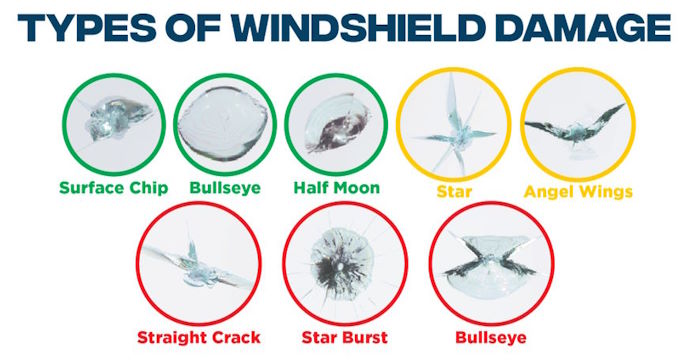
Among the many types that you might encounter, automotive windshields commonly exhibit four types of chips that require attention and repair. Understanding these chips is essential to prevent further damage and ensure road safety.
- A Bulls-Eye Chip derives its name from the circular shape resembling the bull's eye on a dartboard. This chip displays a visible point of impact surrounded by concentric circles. It is crucial not to overlook a bull's eye crack, as neglecting it allows dust and oil to seep into the crack, exacerbating the damage. Immediate attention and repair are necessary to prevent the chip from worsening and compromising the integrity of the windshield.
- A Star Chip poses particular challenges due to its potential to spread across the windshield if left unattended. This type of chip occurs when an object strikes the windshield, leaving minor cracks that branch off from the central point of impact. Prompt action is crucial to address a star chip, as it can rapidly expand and compromise the structural strength of the windshield. Failure to repair it promptly may necessitate a complete windshield replacement, leading to higher costs and potential safety hazards.
- A Half Moon Chip is another common type, resulting from a blunt impact of small debris. This chip takes on a semi-circular shape, making it relatively easier for a trained technician to clean compared to a bull's eye chip. While it is not as intricate as some other types, it is still important to address a half-moon chip promptly to prevent it from spreading or becoming more challenging to repair. Timely attention can save costs and ensure the chip is effectively resolved.
- A Combination Chip represents a challenging amalgamation of a bull's eye and a star chip. When a combination crack occurs, it inflicts extensive damage on the windshield, making it difficult to repair even with modern innovations. Unfortunately, complete restoration of combination cracks is not currently achievable. Thus, it is imperative to address such cracks immediately to prevent further deterioration and explore appropriate solutions with the guidance of a professional.
It is worth noting that some chips are repairable, and it is crucial to address them as soon as possible. The longer a chip remains unattended, the higher the likelihood of it spreading, which can result in increased repair costs. By promptly addressing these chips, it is possible to mitigate the risk of further damage, maintain the structural integrity of the windshield, and ensure a safer driving experience.
But… Truck and Bus windshields cannot be compared directly to car windshields because they exhibit different characteristics, are often much bigger (increased surface area and therefore the strain failure propensity) and are regularly designed to be "kicked out" in an emergency.
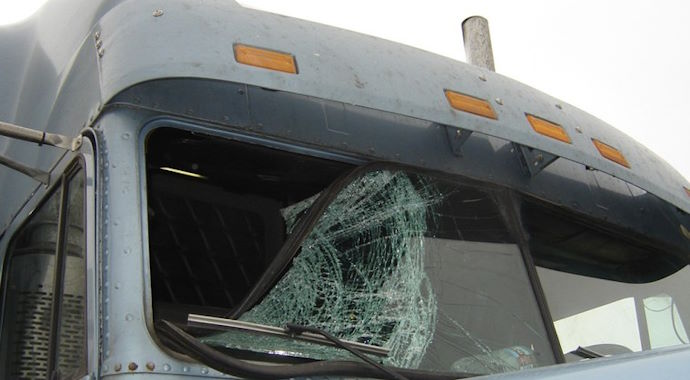
These are the main differences between car and truck windshields as far as characteristics and design are concerned:
- Size and Shape: Car windshields are typically smaller and have a more compact shape compared to semi-truck and bus windshields. The larger size of semi-trucks and buses necessitates larger windshields to provide optimal visibility for the driver.
- Curvature: Car windshields often have a more pronounced curvature to enhance aerodynamics and reduce wind resistance. On the other hand, semi-truck and bus windshields tend to have a flatter design to accommodate the larger surface area required for better visibility.
- Split Windshield: Some semi-trucks and buses feature split windshields, with a vertical divider down the centre, commonly known as a "split windshield." This design facilitates easier replacement of individual sections in case of damage, as well as improved visibility in the corners.
- Wipers and Sprayers: Due to their larger size, semi-truck and bus windshields typically have larger wipers and sprayers compared to car windshields. These vehicles require more powerful wipers to effectively clear a greater surface area during inclement weather.
- Reinforcement and Durability: Semi-truck and bus windshields are built with extra reinforcement and durability features to withstand the rigours of long-haul driving and potential impacts from debris on the road. They are typically thicker and made from laminated glass to prevent shattering upon impact.
- Installation: The application process differs between car windshields and those of semi-trucks and buses. Car windshields typically use a single-layer adhesive or sealant applied between the windshield and the frame. In contrast, semi-truck and bus windshields might require a multi-layer sealant system or their windshields might be installed only with a rubber rim to facilitate easier removal (kicking out, by a trapped driver).
While these are general differences between car, semi-truck, and bus windshields, it's worth noting that specific designs and functionalities can vary depending on the make and model of the vehicle.
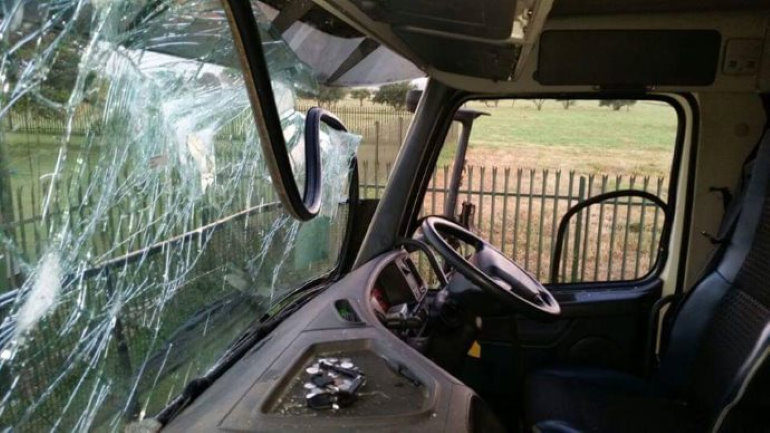
Semi-trucks are large and heavy, and they are constructed from stronger metal structures than general civilian vehicles, to allow them to cope with much longer use cycles, greater structural loads, and extreme weather. In addition to this, semi-trucks typically only have two doors. These two doors could easily become jammed during a collision. When the truck falls on its side, or if the doors are jammed, the windshield is then the only route of escape or extrication, as far as the driver is concerned. To this, many trucks - and certainly most buses - are intentionally designed to allow escape or extrication through the glass areas.
The challenge faced by vehicle designers, then, is that they lose the benefit derived from permanent glass installations, where specialised adhesives are used. This forces the designers to improve the structural integrity of the cab of the semi-truck, or of the roof of the bus. This increases weight and cost, of course. So, there’s a constant struggle between what makes sense, what is financially viable, what offers the highest safety levels, and what is practical.
For this reason, some of the world’s leading safety brands for semi-trucks and buses invest heavily in glass design, installation, and practical application. Because of the much higher forces, greater weights, more serious nature of collisions, and the increased risk to life, semi-truck and bus windshields are designed stronger, are tested very aggressively, and are in constant development even today.
By Stan Bezuidenhout - IBF Investigations, www.ibfusa.info
Stan Bezuidenhout is a highly accomplished and driven forensic specialist, court expert, tactical risk analyst, trainer, speaker, and author. He has dedicated his career to developing a deep understanding and expertise in a wide range of fields related to forensic investigation, risk analysis, and training. He has consistently demonstrated a strong commitment to excellence and a passion for delivering exceptional results in everything he does.
He is a highly qualified and respected professional in the fields of forensic science and risk analysis, with a strong reputation for his expertise and dedication to his work. He is confident in his ability to utilize his skills and knowledge to make a positive impact on any organization or project, and he is always seeking new challenges and opportunities to continue growing and advancing in his career.
Also View
Road Safety and Your Windscreen
Chip Repair and Windscreen Safety
Road Safety near Construction Zones and Road Works
The importance of clear vision
LLumar Window Film and Road Safety
Shatterprufe and Road Safety
Cracked Windshield, Safe Driving and the Law